
Contrary to expectations, the new business premium (NBP) of life insurance companies dropped 12.62 per cent year-on-year (YoY) in March 2023 due to an over 30 per cent drop in Life Insurance Corporation (LIC) of India's premiums, albeit on a high base. Data released by the Life Insurance Council shows the industry racked up NBP of Rs 52,081 crore in March 2023, compared with Rs 59,608.83 crore in the year-ago period. NBP is the premium acquired from new policies in a year. It is the sum of the first-year premium and single premium, reflecting the total premium received from new businesses.

Two listed firms belonging to the Baba Kalyani Group (BNK Group) have contested their inclusion as parties in a suit pertaining to family dispute over ownership of chemical firm Hikal. The co-promoters of the company - Kalyani and Hiremath families - are mired in a legal dispute, with the latter seeking transfer of ownership of shares held by the BNK Group, citing nearly three-decade old family arrangement. An affidavit filed in reply to Hiremath's suit petition in the Bombay high court, BF Investment (BFIL) and Kalyani Investment Company (KICL) have stated that they are separate and distinct legal entities and were not even incorporated and party to the 'family arrangement'.

The country's largest bourse National Stock Exchange (NSE) has put the NSE Prime initiative in cold storage following lukewarm response from India Inc, said people aware of the development. Inspired by Brazil's Novo Mercado, NSE had announced a separate platform which any listed company could be part of by voluntarily adopting a stricter corporate governance code. Launched in December 2021, NSE Prime was to formally take off within a year after empanelling companies.

The four public sector general insurance companies -- New India Assurance, United India Insurance, Oriental Insurance, and National Insurance Company -- have lost 800 basis points (bps) in market share in last five years to their private counterparts, the data from the Insurance Regulatory and Development Authority (Irdai) revealed. In 2018-19, the four had a cumulative market share of 40.04 per cent, with New India Assurance having a market share of 14 per cent and United India Insurance with a market share of 9.63 per cent. But, gradually in the past five years, these state-backed firms have lost their market share to private sector players, due to the declining health of their business.
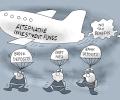
'Given that debt AIFs, by nature, target a higher portfolio return, it is likely to attract investors like HNIs, family offices, etc, looking for a higher yield debt product.'

The Supreme Court's decision to allow borrowers a chance to be heard before their accounts are flagged as fraudulent by lenders is expected to result in several cases being reopened where the borrower is aggrieved because of such classification, bankers said. Still, the reopening of cases would not be automatic. A borrower who is aggrieved by the 'fraud' classification will have to approach the bank and consequently, the bank will take the necessary steps so that the apex court's order is followed in letter and spirit, they said.
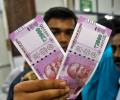
By the end of March 2022, only 2,140 million pieces of Rs 2,000 denomination currency notes were in circulation, or 13.8 per cent of the total value of notes.

Analysts say domestic banks' dependence on local depositors insulates them from the crisis.

UBS stepping in to save Credit Suisse with a $3.2-billion acquisition has provided the beleaguered Swiss bank's India employees a glimmer of hope. The surprise deal - engineered by the Swiss government - has triggered optimism of fewer job losses at Credit Suisse's India unit and better synergies at key verticals, such as wealth management and investment banking. "UBS is a much stronger hand. Coming within its fold will give Credit Suisse's wealth management and investment banking divisions a good home.
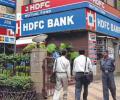
The Reserve Bank of India is likely to take a call on the relaxations sought by HDFC Bank in relation to the merger, as the date of merger draws closer, sources said. The HDFC twins, which announced their decision to merge in April last year, received National Company Law Tribunal's (NCLT's) approval recently - a key milestone to close the deal in due time. The management of both the entities had said that it will take 15-18 months for the merger.
Life insurance companies reported a 17 per cent year-on-year (YoY) drop in new business premium (NBP) in February as state-owned Life Insurance Corporation of India's premiums contracted 32 per cent during this period on account of a drop in its group single premium segment. According to data released by the Life Insurance Council, the industry earned an NBP of Rs 22,847.65 crore in February - a drop of 17 per cent from the same period a year ago.
200 staffers, consisting of RBI officials and support teams, who are essential to perform critical functions, were isolated at a separate facility in a dedicated quarantined environment near all three RBI data centres.
Many life insurance companies are yet to see a sharp spike in the sale of high-value policies as was widely expected in the aftermath of the government's decision to tax income from insurance policies having an aggregate premium above Rs 5 lakh in a year.

Equities are the go-to asset class as far as ultra-long-term returns are concerned. Over the past 123 years, global equities have provided an annualised real return of 5 per cent in US dollar terms, while bonds have delivered 1.7 per cent and short-term bills just 0.4 per cent, according to Credit Suisse's Global Investment Returns Yearbook 2023. In collaboration with the London Business School, Credit Suisse has analysed over 100 years of returns for key asset classes in 35 countries.

The Securities and Exchange Board of India's (Sebi's) proposal to re-introduce "hard underwriting" is seen as step to boost India's moribund initial public offering (IPO) markets. The regulator has proposed that in case an IPO fails to garner full subscription, the investment banker or a third-party can buy the unsubscribed shares. This practice was common during fixed-price issues prior to 1999. However, under the new book building regime, underwriting is allowed only to the extent of shortfall due to technical rejection of bids - this is referred to as "soft underwriting" and is rarely invoked.

Shares of Life Insurance Corporation (LIC) of India hit fresh record lows amid sustained decline in Adani Group stocks. Its stock finished at Rs 567.8, down 2.9 per cent over its previous close. The state-owned insurer's market value is now down Rs 2.4 trillion, or 40 per cent, compared to initial public offering levels.

The Securities and Exchange Board of India (Sebi) has proposed to put a stop to the practice of certain directors occupying permanent board seats at listed companies. The regulator has suggested that the directorship of any individual serving on the board should be subject to periodic approval from shareholders, at least once in five years. In a discussion paper issued on Tuesday, Sebi said a few promoters enjoyed permanency on the board, giving them an undue advantage, prejudicial to the interests of public shareholders.

Friday will be a landmark day for domestic markets, with all the listed stocks entering the professed T+1 (trading plus one day) settlement cycle. About 200 stocks, which account for more than 80 per cent of India's market capitalisation, will be settled on a next-day basis, with effect from January 27. This will evidently complete the transition to the T+1 cycle that started in February 2022 with the bottom 500 stocks in terms of market value.
After a sequential fall in November, due to high base and waning of the festival season effect, credit card spends have picked up again in December, recording over Rs 1 trillion for the 10th consecutive month. Latest figures released by the Reserve Bank of India (RBI) show that credit card spends in December 2022 touched Rs 1.26 trillion, up 10.21 per cent compared to November. And, on a year-on-year (YoY) basis, spends were up 34.31 per cent during this period.

Indians remitted close to $2 billion in November under the Reserve Bank of India's (RBI's) liberalised remittance scheme (LRS), latest data released by the central bank showed. Outward remittances under the scheme jumped 29 per cent to $1.99 billion compared to $1.54 billion in the year-ago month. Sequentially, outward remittances under the scheme were up about 3.5 per cent.
 © 2026 Rediff.com - Advertise with us - Disclaimer - Privacy Policy - Sitemap - Feedback - About us - Terms of use - Grievances